
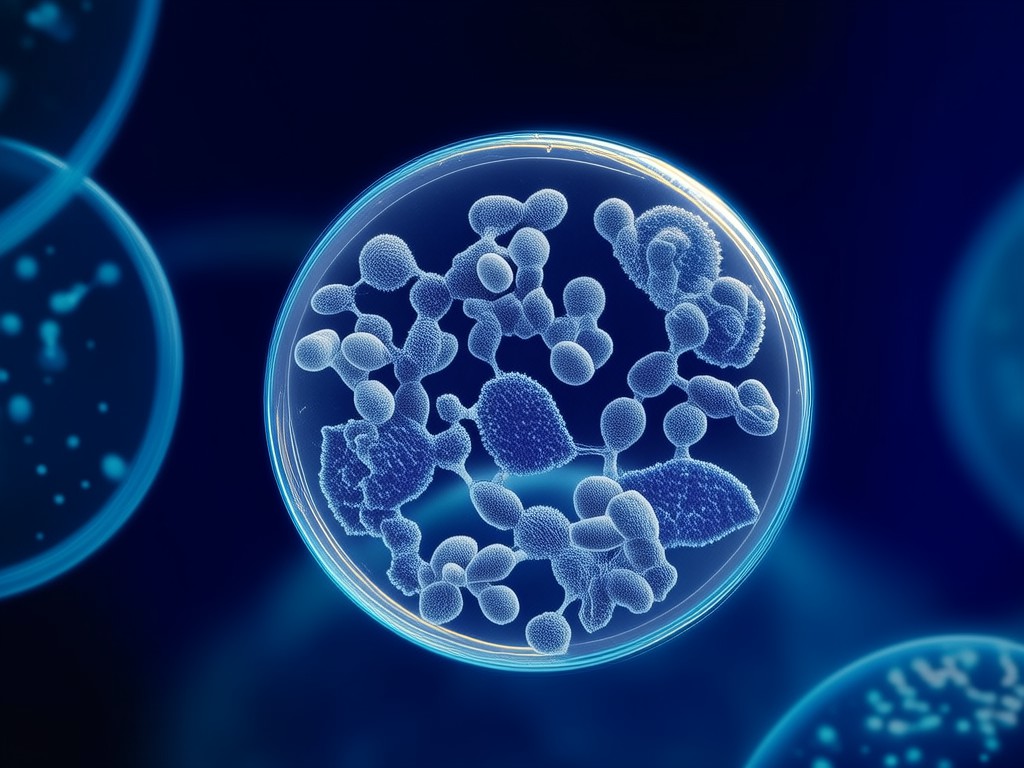
Microplastic particles provide persistent surfaces for biofilm formation, a trait that raises new questions regarding their environmental impacts. In aquatic environments, microplastics can host microbial biofilms containing pathogens and antimicrobial resistance genes, thereby acting as potential carriers of health hazards.
Microplastics have emerged as one of the most widely distributed forms of pollution on Earth. Researchers have detected microplastic particles in oceans, rivers, lakes, soils, wastewater systems and even the human body. Scientists estimate that up to 125 trillion microplastic particles are present on the surface of the world’s oceans. For many years, research has mainly focused on the physical impacts of these particles, examining their persistence, migration within ecosystems and effects on wildlife. In recent years, however, investigators have explored another property of microplastics: once released into the environment, they are no longer inert particles but serve as habitats for microbial communities.
These communities form biofilms on particle surfaces, collectively known as the “plastisphere”. Researchers have found that the plastisphere can harbour bacteria, pathogens and antimicrobial resistance (AMR) genes, raising critical questions about the role of microplastics in transporting microorganisms in aquatic environments. A recent study published in Environment International addressed this issue by tracking microbial colonisation along the pathway from wastewater to the ocean. The research investigated how microorganisms colonise different materials under real environmental conditions, and whether plastic substrates behave differently from natural or inert surfaces.
To conduct the study, researchers deployed materials at four sites representing decreasing levels of pollution: hospital wastewater, an upstream river site, a downstream river site and a marine environment. This setup allowed the team to examine how microbial communities change as materials move away from the heavily polluted wastewater source. Several substrate types were compared, including polystyrene particles, high-density polyethylene particles, polyethylene bio-carriers, wood and glass. Wood served as a natural reference material, and glass as an inert control. After the materials were submerged underwater for two months, the attached microbial communities were analysed using whole metagenome sequencing.
The results revealed that microplastics rapidly become biological habitats. More than 5,400 bacterial species were identified across all sites, with community composition varying markedly by location. Hospital wastewater sustained the highest microbial abundance, whereas downstream and marine environments harboured distinct microbial profiles. Environmental conditions appeared to exert the greatest influence on determining which microorganisms colonise surfaces, yet the study also uncovered significant differences among substrate types.
One of the most notable findings concerns antimicrobial resistance genes. Researchers detected resistance genes in all environments; nevertheless, plastic substrates harboured far more unique antimicrobial resistance gene sequences than control materials. Plastic surfaces carried 110 unique antimicrobial resistance gene sequences, compared with 30 on natural substrates and 17 on inert substrates. This finding suggests that microplastics may provide favourable conditions for the persistence of resistance-associated microbial communities. Unlike many natural materials, plastic particles can persist in the environment for long periods and migrate over long distances via rivers, wastewater systems and marine environments, and may therefore function as long-term platforms for microbial attachment and transport.
The study also found that not all plastics behave identically. Certain classes of resistance genes were more strongly associated with high-density polyethylene and polystyrene particles, especially in downstream and marine environments. Although the mechanisms behind these differences remain unclear, the results indicate that polymer type may shape microbial colonisation patterns. Multiple factors may account for these observations; surface chemistry, hydrophobicity, roughness and biofilm-forming characteristics can all affect how microorganisms attach to different materials. Further research is required to identify which properties are most influential and whether improvements can be achieved through material design.
For the plastics industry, these findings add a new dimension to discussions surrounding microplastic pollution. Traditionally, attention has centred on persistence, fragmentation and environmental accumulation, yet emerging evidence indicates that microplastics can also act as mobile microbial habitats capable of transporting pathogens and resistance genes through interconnected aquatic systems. While the study does not establish direct health risks posed by specific plastic materials, it highlights the need for a better understanding of biological interactions occurring once plastic particles enter the environment. Future research may help identify material properties that reduce microbial attachment or limit biofilm persistence.
As concerns over microplastic pollution continue to grow, understanding the plastisphere will gain increasing importance. Microplastics are not merely passive pollutants; they are active surfaces that interact with surrounding ecosystems in complex ways. These interactions represent a vital area of research for scientists and industry stakeholders alike, alongside ongoing efforts to lower the environmental footprint of plastic materials.
This article is reprinted from Huizheng Info. It is for learning and reference only and does not constitute any professional advice or commercial basis.